Washington Bird Year
Bird photos and their habitat
Bald Eagle
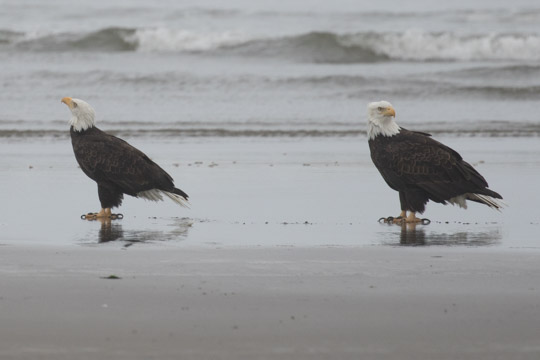
Beach - Ocean Park, WA October 6, 2016


The bald eagle (Haliaeetus leucocephalus) is a bird of prey native to North America, and it’s the national bird and symbol of the United States. Here are some key details about the bald eagle:
- Appearance: Adults have a distinctive white head and tail, with a dark brown body and wings. Their yellow beak and talons are also striking features. Young eagles are mostly brown with white mottling and take several years to develop the iconic white head and tail.
- Size: Bald eagles are large birds, with a wingspan ranging from 6 to 7.5 feet (1.8 to 2.3 meters) and weighing between 6.6 to 14 pounds (3 to 6.3 kg).
- Diet: They primarily eat fish, which they catch by swooping down to the water. They are also opportunistic feeders and will eat carrion or steal prey from other animals.
- Habitat: Bald eagles are found near large bodies of open water, such as lakes, rivers, and coastal areas, where they can find ample food and tall trees for nesting.
- Conservation: Once endangered due to hunting, habitat destruction, and pesticide use (particularly DDT), the bald eagle population has rebounded significantly after conservation efforts. In 2007, they were removed from the U.S. federal government’s list of endangered and threatened species.